
At under €3,000, the price shown in the listing represents only a fraction of the real budget. An older car commits its owner to a total cost that includes repairs, maintenance and driving restrictions. Before choosing a model, the first question is how much the vehicle will actually cost over the twelve months after purchase.
Total cost of ownership for a budget car
The usual approach is to compare asking prices across listings. In this price range, the difference between two examples of the same model rarely exceeds a few hundred euros. What widens the gap is the cost of repairs and maintenance still to come.
A car listed at €2,500 with a full service history and recent invoices will cost less over a year than one priced at €1,800 with no history and a timing belt or brakes that need replacing. It is wise to set aside a repair budget rather than spend the entire €3,000 on the purchase alone.
Before signing, ask for maintenance invoices and check that the advertised mileage matches the figures recorded during roadworthiness tests. HistoVec, the French Ministry of the Interior’s free service, allows the seller to generate a report showing changes of ownership, administrative status and recorded mileage. The report has its limits: it does not replace invoices or a mechanical inspection, and records from before the vehicle was registered in France may be missing.
To buy a car for under €3,000 without any nasty surprises, a recent roadworthiness test is still the key document: it lists any faults found and provides a mileage reading that can help identify discrepancies with the listing.

Crit’Air restrictions and low-emission zones: check before you buy
A reliable, well-maintained model can become unusable if local regulations prohibit it from being driven. Low-emission zones (LEZs) now cover several French metropolitan areas, and the timetable varies from one city to another.
The Crit’Air sticker alone is not enough to determine whether a car can be driven everywhere. A Crit’Air 4 car may still be allowed in some urban areas while already being banned in others. Before buying, check two things:
- The vehicle’s Crit’Air class, determined by its engine type and date of first registration (a diesel car from the 2000s is often rated Crit’Air 4 or 5).
- The LEZ restriction schedule for the metropolitan area where the car will actually be used day to day, not just the city where it is being bought.
- Any exemptions (for infrequent drivers, classic cars or occasional trips), which vary according to local regulations.
An older diesel bought in a rural area for exclusively suburban use will pose no problem. The same vehicle bought for regular trips into the centre of a major city could be banned from the road within months or years of purchase. Where the car will actually be used determines the choice of engine, sometimes more than the price or reliability of the model.
Petrol or diesel under €3,000: choose based on how you drive
Diesel cars dominate the market in this price range. Petrol cars with comparable mileage are often newer, making them more expensive or harder to find within this budget.
Diesel: still a sensible choice for high-mileage drivers
A diesel is still a good option if you drive more than average and your journeys are outside LEZs. Fuel consumption is lower, and diesel engines from this era (HDi engines in Peugeot and Citroën models, dCi engines in Renault models) have proved their longevity. The main risk lies with fuel-injection components (injectors, high-pressure pump), whose replacement can cost more than the vehicle is worth.
Petrol: greater flexibility in the face of restrictions
A petrol engine from the same period generally gets a better Crit’Air rating. Mechanical repairs often cost less, and routine maintenance is simpler. For city driving or mixed use with short trips, a petrol model is more compatible with LEZs and offers more predictable maintenance costs.
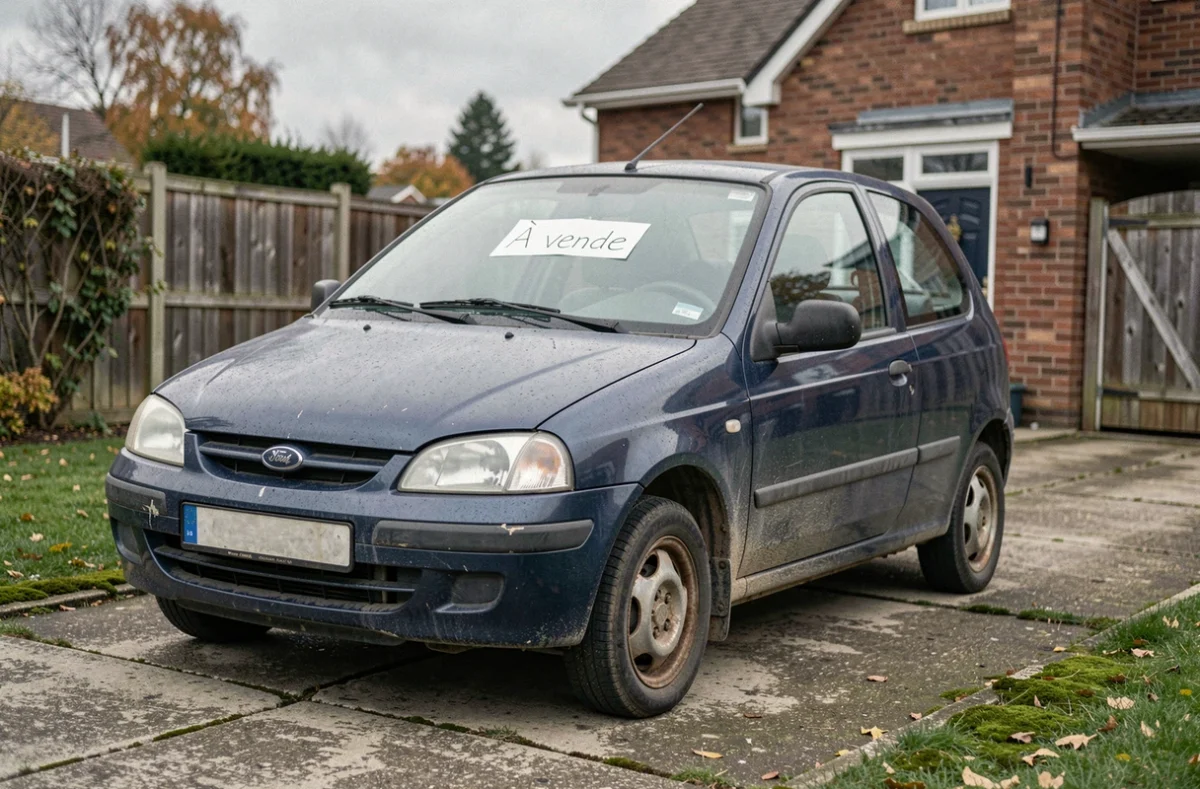
Reliable cars under €3,000: practical selection criteria
Rather than skimming through a list of ten models, use these three criteria to filter listings effectively within this budget.
The first criterion is the availability of spare parts. Models produced in large numbers (Toyota, Peugeot, Renault and Ford ranges) benefit from a plentiful supply of parts, including used ones. A less common model may seem like an attractive buy but cost twice as much to maintain.
The second criterion is the specific engine, not just the brand. The same model may be available with one engine known for its durability and another with a reputation for problems. For example, some naturally aspirated petrol engines in the Peugeot range are known to last much longer than turbo versions from the same period.
The third criterion is the condition of the specific car. A roadworthiness test with no major faults and a complete service history are worth more than the model’s name. Even a model known for its reliability is a poor buy if it has been badly maintained. The absence of mileage discrepancies in the HistoVec report does not guarantee good mechanical condition, as mileage is only recorded at certain intervals.
Choosing a budget car depends less on finding the ideal model than on carrying out thorough checks before buying. A well-documented car that complies with local driving restrictions and has predictable repairs within the budget is a sensible purchase, whatever badge is on the bonnet.