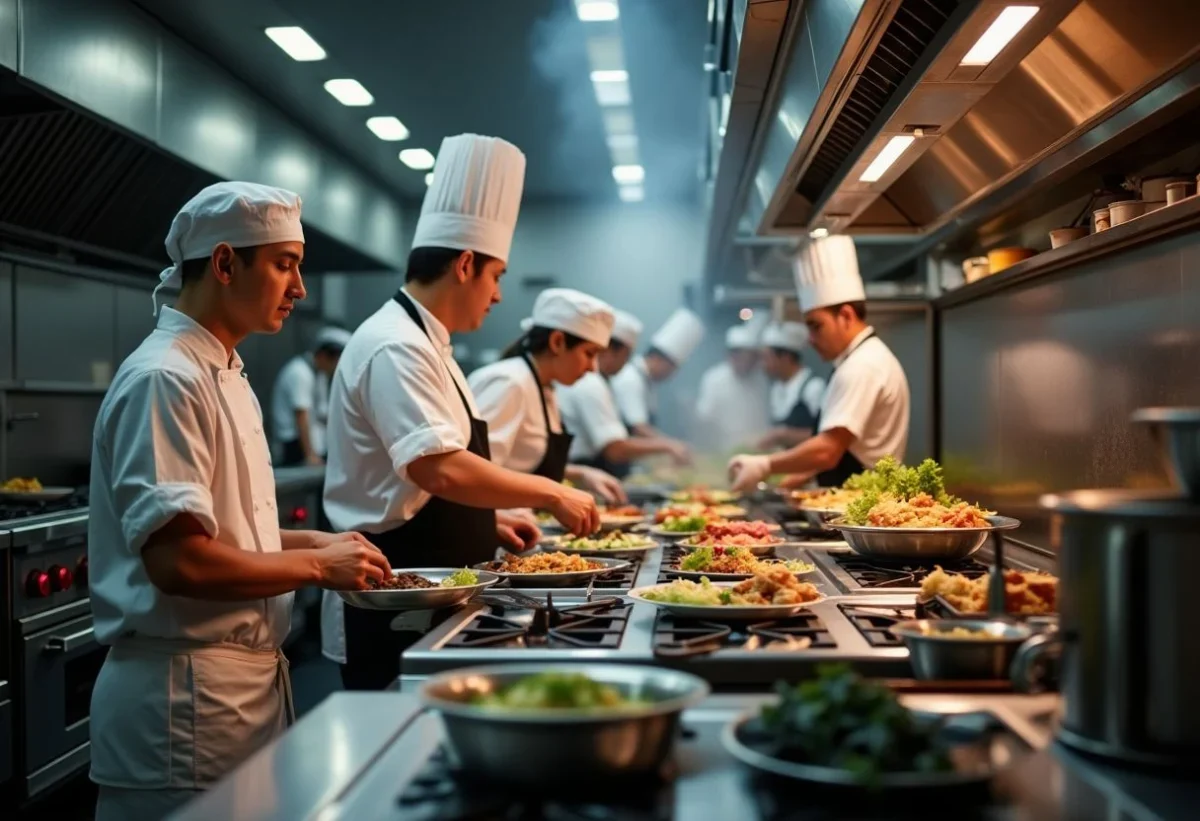
In the dynamic and demanding world of catering, success does not solely rely on delicious recipes or skilled management. An often underestimated cornerstone lies in the rigorous selection of catering equipment. This equipment forms the beating heart of any professional kitchen, determining not only operational efficiency but also the quality of the dishes served. Whether you are a Michelin-starred chef or a novice in the field, understanding the ins and outs of catering equipment is essential for providing a memorable dining experience for your customers.
Kitchen Equipment: Essential for Any Professional Kitchen
In catering, kitchen equipment is the foundation upon which the preparation of quality dishes rests. Identifying the essential elements is a crucial first step.
Industrial ovens represent the backbone of many kitchens, as they allow for the baking, roasting, or grilling of a wide variety of foods in a uniform manner. Refrigerators, on the other hand, are indispensable for ensuring the freshness of ingredients. They come in various sizes and formats, thus adapting to the specific needs of each establishment. Cooktops, whether induction or gas, offer unparalleled flexibility for preparing various dishes, from delicate sauces to stews. Finally, industrial dishwashers ensure quick and efficient cleaning of dishes, essential in an environment where time is a luxury.
Utensils: The Art of Perfecting Every Detail
In the orchestrated ballet of a kitchen, each utensil plays a determining role. Their diversity and utility make them indispensable tools for chefs, big or small.
- Professional knives: Their precision and maneuverability are essential for perfect cuts.
- Cutting boards: They preserve the quality of the blades while providing a stable surface.
- Mixers and blenders: They allow for the creation of varied textures, from soups to purées.
- Spatulas and ladles: Essential for handling food carefully, without damaging preparations.
With the diversity of utensils available, each chef can customize their workspace, thus ensuring optimal efficiency and creativity.
Design and Layout: Merging Aesthetics and Functionality
The design of the kitchen is not limited to a simple aesthetic choice. It also influences productivity and the ergonomics of working in the kitchen.
The materials used for work surfaces, such as stainless steel, are prized for their durability and ease of cleaning. Storage must be optimized for quick access to ingredients and utensils, thereby reducing unnecessary movements. Workflow must be carefully planned to minimize crossings between different activity areas.
A well-thought-out space allows teams to work smoothly, ensuring flawless efficiency even during peak times.
The Importance of Equipment Maintenance: Ensuring Longevity and Performance
Once the catering equipment is installed, regular maintenance ensures its longevity and proper functioning. Ignoring this aspect can lead to costly breakdowns and interruptions in service.
- Establish a preventive maintenance schedule for each piece of equipment.
- Train staff on the correct use and cleaning of appliances.
- Call in qualified technicians for complex repairs.
- Invest in quality equipment, known for its durability and reliability.
Implementing these strategies not only guarantees the longevity of the equipment but also enhances safety for both staff and customers.