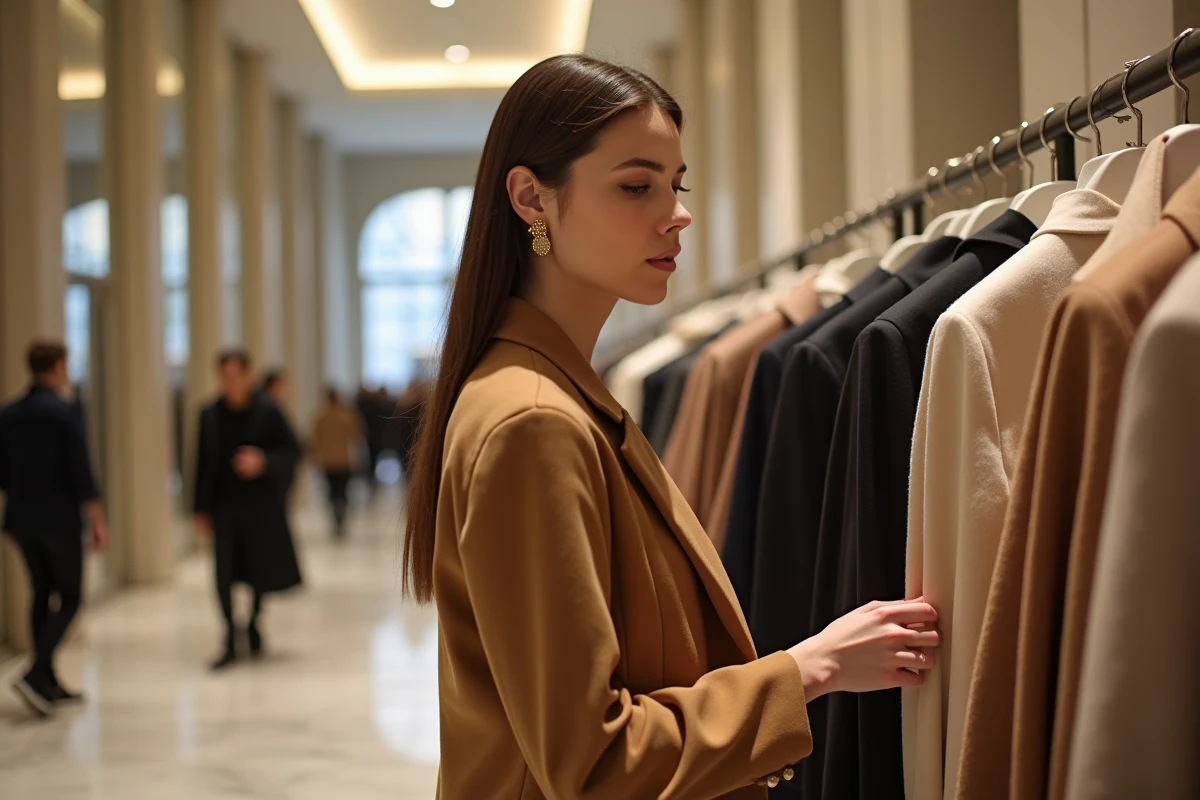
French department stores no longer just sell ready-to-wear. Their role as trendsetters has expanded to include circular fashion, corners for emerging designers, and traceability in textile supply chains. Following the fashion trends of the galleries now means understanding the industrial choices that reshape the in-store offerings.
Textile Traceability and European Obligations in Fashion Galleries
The European regulation on the eco-design of textile products gradually requires distributors to provide detailed information about the origin of fibers, manufacturing conditions, and the durability of garments. For department stores, this regulatory constraint translates into extensive work on labels and product sheets.
We observe that galleries like Galeries Lafayette and Le Printemps have had to adapt their information systems to integrate these traceability data directly on the sales floor. The digital product passport, which is expected to become widespread in the coming seasons, will require each textile item sold in the gallery to display a QR code linking to its complete traceability sheet.
This transformation is not cosmetic. It restructures the relationships between department store buyers and suppliers, as brands that cannot document their supply chain risk being delisted. Galleries thus become filters of compliance, not just showcases.
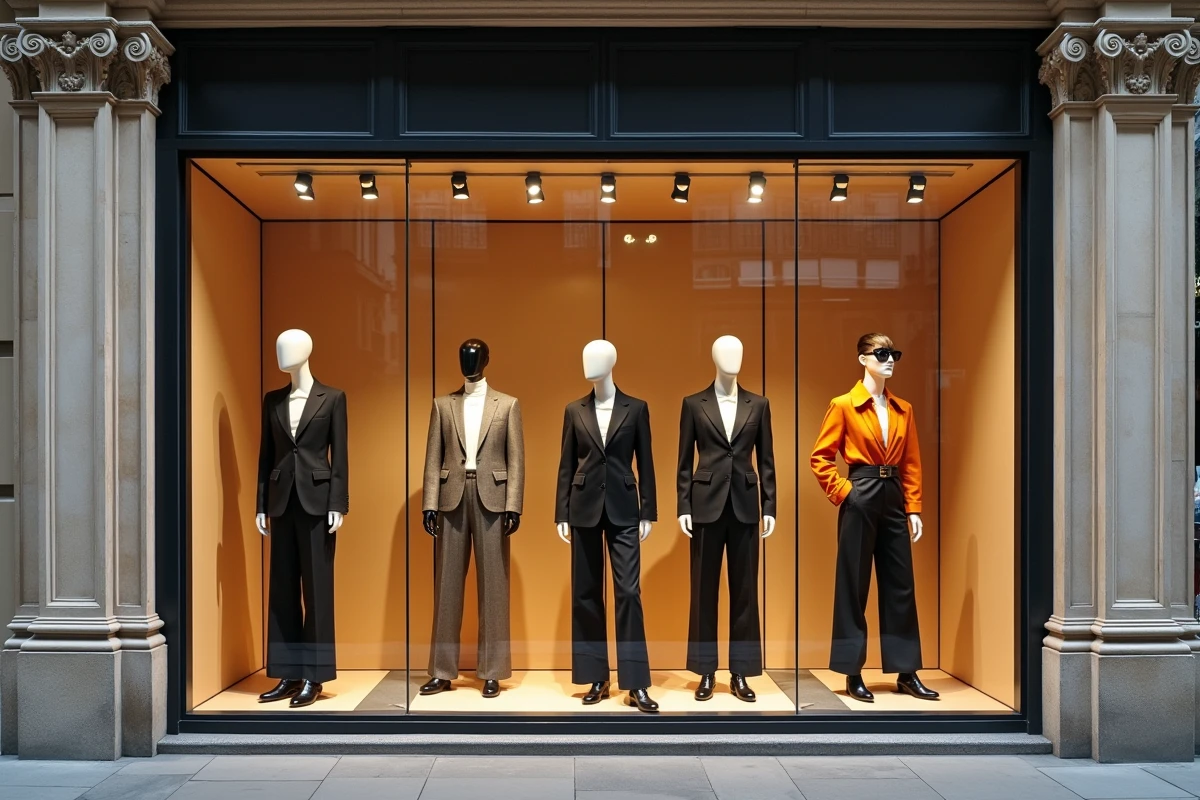
To keep track of these topics as collections evolve, the news on Les Galeries de la Mode compiles recent movements in the sector, from corner launches to brand repositionings.
Circular Fashion in Department Stores: Second-Hand Corners and Upcycling Workshops
Circular fashion is no longer a peripheral marketing argument. Galeries Lafayette is structuring a multi-brand second-hand offer alongside new items, with dedicated corners like Monogram, regular wardrobe sales, and upcycling workshops deployed in several of their stores, beyond just the flagship Haussmann.
This positioning responds to measurable demand. Department store customers seek both curation (sorted, authenticated pieces presented in a well-maintained setting) and the quality assurance that the online resale market cannot always provide. The physical corner in the gallery plays this role of a trusted third party.
We recommend monitoring three indicators to assess the maturity of these initiatives:
- The share of retail space allocated to second-hand items compared to new, which is increasing season after season in Parisian department stores.
- The presence of integrated repair and alteration workshops, a sign that the gallery invests in post-purchase sustainability and not just in resale.
- The number of partner brands accepting returns of their products through the department store channel, which implies complex logistical agreements.
Le Printemps and La Samaritaine are advancing on similar axes, but with different formats. La Samaritaine focuses more on event-driven pop-ups related to responsible fashion, while Le Printemps integrates circularity into its permanent spaces more discreetly.
Emerging Designers and Temporary Corners: The Response to Standardization
The galleries are betting on young French and European brands to differentiate themselves from traditional shopping centers. For several seasons, temporary spaces dedicated to emerging designers have multiplied, often under labels like “Made in France” or eco-responsible certifications.
The “Grand Magasin 2030” study published by the Alliance du Commerce in 2024 confirms this structural trend. Customers criticize traditional shopping galleries for offering too homogeneous a selection. The corners of young designers respond to this critique by offering limited-edition pieces that are unavailable online or in fast fashion chains.
For emerging brands, accessing a corner in a gallery remains a significant visibility lever. The transition to a Parisian department store acts as a commercial validation that subsequently facilitates negotiations with other distributors. Galeries Lafayette and Westfield have formalized selection programs with juries and calls for applications, structuring an access pathway that did not exist five years ago.
The risk for the galleries is to turn these corners into mere communication operations without real purchasing commitment. A profitable temporary corner requires merchandising support (advice on pricing, visual merchandising, product storytelling) that not all brands provide with the same rigor.
Spring-Summer Fashion Trends Noted in Galleries in Paris
Buyers from Parisian department stores set the pace for trends several months before the season. This spring, three key themes emerge from the selections observed in the galleries.
Linen and plant fibers dominate the capsule collections highlighted on the main racks. This choice reflects both an aesthetic trend (natural textures, earthy palettes) and a regulatory constraint: traceable and low-impact fibers are easier to document under the new labeling obligations.
Structured oversized silhouettes remain a common thread, particularly among the designers selected for the temporary corners. The loose cut allows for patterns that minimize fabric waste, an argument that galleries are beginning to promote to their clientele sensitive to responsible fashion.
Artisanal accessories (ceramic jewelry, vegetable-tanned leather bags, screen-printed scarves) are gaining visibility in the fashion spaces of the galleries. This category benefits from a double advantage: higher margins for the distributor and a manufacturing story that is easy to tell on the sales floor.
Fashion Galleries and Exhibitions: When Art and Fashion Converge in Paris
Several Parisian department stores are now programming fashion exhibitions in their spaces, blurring the line between commerce and culture. Galeries Lafayette Haussmann regularly hosts installations by contemporary artists related to fashion, while Le Printemps organizes scenographic tours around its seasonal windows.
These exhibitions attract an audience that does not come to buy but ends up consuming. The time spent in-store increases, along with the conversion rate. For the galleries, investing in cultural programming serves as a customer acquisition lever that is less costly than digital advertising.
The Palais Galliera and the Musée des Arts Décoratifs remain the reference institutions for fashion exhibitions in Paris, but department stores now occupy a complementary niche: that of accessible, free exhibitions integrated into the shopping experience. This hybridization between museum and commercial gallery redefines how fashion is displayed and sold in the capital.