
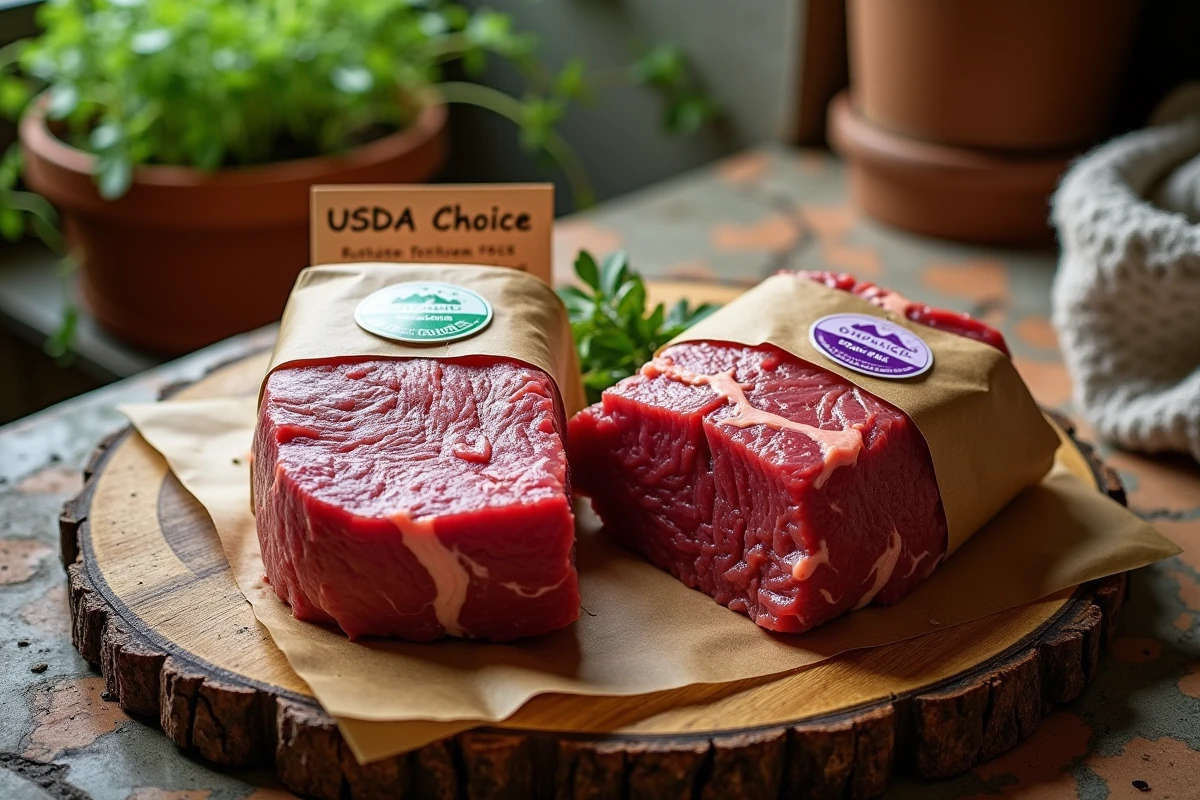
The USDA Choice stamped beef meets specific criteria for marbling and tenderness, defined by the United States Department of Agriculture. This classification does not indicate anything about the farming methods, animal feed, or the use of antibiotics. A USDA Choice cut can come from an intensive feedlot or a certified organic farm. Understanding what each label entails allows for an informed choice at the time of purchase.
USDA Organic Audits Since 2025: What Has Changed for Beef
Since January 2025, the USDA has strengthened its annual audits for certified organic farms (USDA Organic). Inspections now include mandatory tests for antibiotic and pesticide residues, a requirement completely absent from the Choice grade when considered in isolation.
This regulatory evolution creates a tangible gap between two cuts that may display the same level of marbling. The Choice grade evaluates the taste quality of the meat, not the conditions in which the animal was raised. The Organic label, on the other hand, regulates feeding (non-GMO, no synthetic pesticides), access to pasture, and the prohibition of preventive antibiotics.
To delve deeper into these distinctions, a dedicated article on the USDA Choice label on Le Bio du Coin details the concrete implications of each certification on product traceability.
A beef can therefore hold both labels (Choice and Organic), but one does not imply the other. The absence of the Organic label on a USDA Choice package simply means that the farm has not undergone organic audits, not that the meat is of lesser organoleptic quality.
Cattle Feeding: Grass, Grain, and Marbling
The most tangible difference between organic and conventional beef lies in the feeding. In conventional farming, cattle generally spend their last months finishing on grain (corn, soy) to accelerate weight gain and increase intramuscular marbling.
In USDA Organic certified farming, feeding is based on forages free from synthetic pesticides and genetically modified organisms. Some organic farmers report an increase in marbling due to pastures enriched with legumes, which improves tenderness without resorting to the additives used in intensive production systems.
What Sensory Tests Reveal
Sensory tests published by Consumer Reports in 2025 highlighted a marked preference for the “herbaceous” flavor of grass-fed organic beef. This flavor profile, more persistent on the palate, clearly distinguishes itself from conventional grain-fed finishes, which produce meat with a more neutral taste and a more melting fat.
Field feedback diverges on this point: some consumers prefer the melt of grain-fed, while others appreciate the aromatic complexity of organic grass-fed. Perceived quality depends as much on dietary habits as on farming methods.
Blockchain Traceability and USDA Choice Organic Supply Chain
Traceability is often a neglected angle in the organic versus conventional debate. In 2025, several suppliers of organic USDA Choice beef adopted blockchain traceability to verify the absence of GMOs from the calf’s birth. This technology remains rare in conventional Choice chains.
The principle is simple: every stage of the animal’s life (birth, feeding, veterinary treatments, slaughter) is recorded on an unalterable digital ledger. Consumers can scan a QR code on the packaging to trace the entire chain.
For the conventional supply chain, traceability exists but relies on more traditional systems (batches, paper certificates) that do not always cover the entire journey of the animal. The available data do not allow us to conclude that blockchain guarantees better sanitary quality, but it offers a higher level of transparency regarding farming practices.
Reading the Label: Key Mentions to Check Before Purchase
In the face of the proliferation of labels in the American market, a few concrete guidelines help to navigate. Here are the mentions that matter on a beef package:
- USDA Choice or Prime: indicates only the level of marbling and tenderness, without any information about farming methods or feeding.
- USDA Organic: certifies the absence of synthetic pesticides, GMOs, and preventive antibiotics in the feed, with strengthened annual audits since 2025.
- Grass-fed: means that the animal has primarily consumed grass, but this mention is not systematically controlled by a third party and does not guarantee organic farming.
- No antibiotics ever: indicates the total absence of antibiotics throughout the animal’s life, a mention distinct from the Organic certification which allows certain regulated curative treatments.
Combining Labels to Refine Your Choice
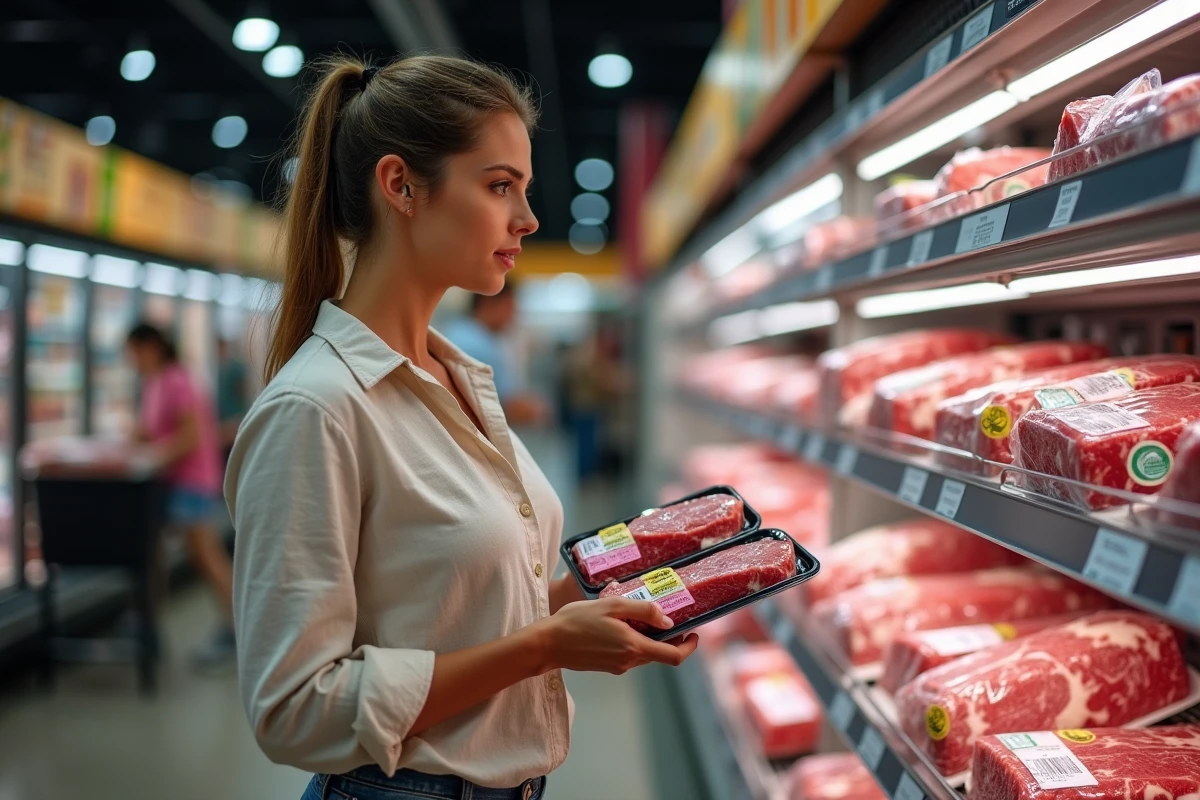
A cut bearing both the USDA Choice and USDA Organic labels guarantees tender, well-marbled meat from a farm audited for its environmental and sanitary practices. This combination remains minority on the market, which explains its higher price.
Conversely, a USDA Choice beef without the Organic mention can very well come from a respectful farm, simply not certified. Certification has a cost that not all farmers can absorb, especially small farms.
The USDA grade guarantees what you will find on your plate in terms of texture. The Organic label guarantees what happened before. The two address different questions, and neither replaces the other. Knowing which one matters most depends on what you are looking for: a calibrated taste experience, a requirement on farming practices, or both at once.