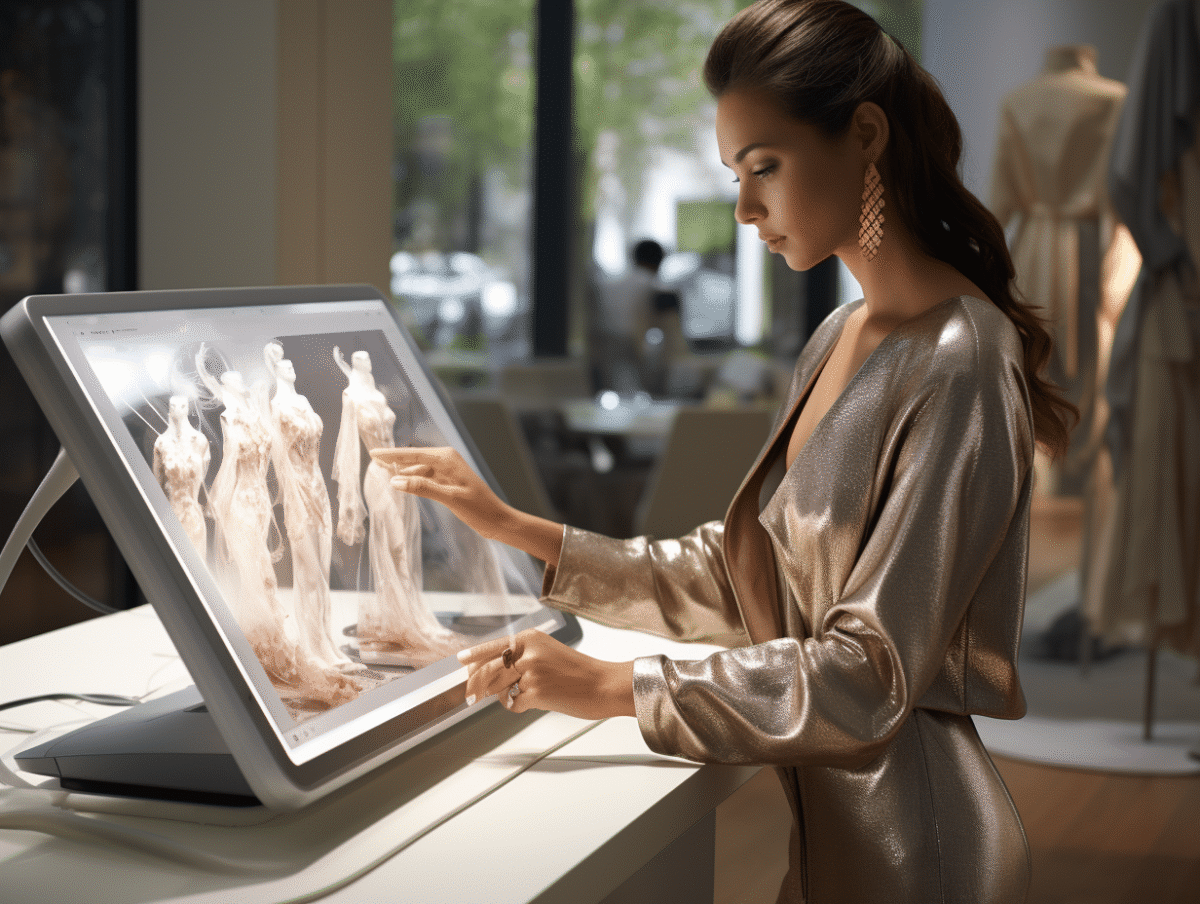
The fashion industry is in full swing, driven by an unceasing wave of technological innovations and overflowing creativity. Faced with consumers who are increasingly aware of environmental and social issues, designers and brands are working to reinvent manufacturing processes and the products themselves. Sustainable materials and new technologies, such as 3D printing and artificial intelligence, are transforming the way clothing is designed, produced, and worn. This transformation is not only technical but also artistic, with designers pushing the boundaries of what is possible to create innovative pieces that reflect a responsible and bold future.
The New Frontiers of Creation: Between Technology and Eco-Responsibility
The intersection of innovation and eco-responsibility is shaping the contours of tomorrow’s fashion. In Lille, the Catholic University stands out as an epicenter of the transformation of the textile industry. Within this melting pot of knowledge, the Laboratory of Pedagogical Innovation (LIP) and the International Institute of Prospective on Innovative Ecosystems (IIPEI) collaborate to develop sustainable solutions. These entities, under the leadership of Jean-Charles CAILLIEZ, Vice-President of Innovation, are committed to creativity and the application of new technologies to forge a circular fashion that offers sustainable alternatives to conventional methods.
The Design School, affiliated with the Catholic University of Lille, is a strategic model for innovation in pedagogy, research, and entrepreneurship. Here, SAV 35 plays a key role in integrating artificial intelligence into the creative processes. Circular fashion, illustrated by players like NA-KD, finds in this project a fertile ground to experiment and deploy environmentally friendly practices centered around reuse, repair, and recycling of fashion products.
These initiatives, rooted in the reality of sustainable development, demonstrate that ecological values can coexist with technical progress. The Catholic University of Lille, with its diverse components such as the Institute of Entrepreneurship (IES) and the Doctoral School (ED), propels innovation to the heart of education and research. The dialogue between technology and environmental responsibility is redefining fashion practices, paving the way for a more conscious industry that is responsive to contemporary challenges.
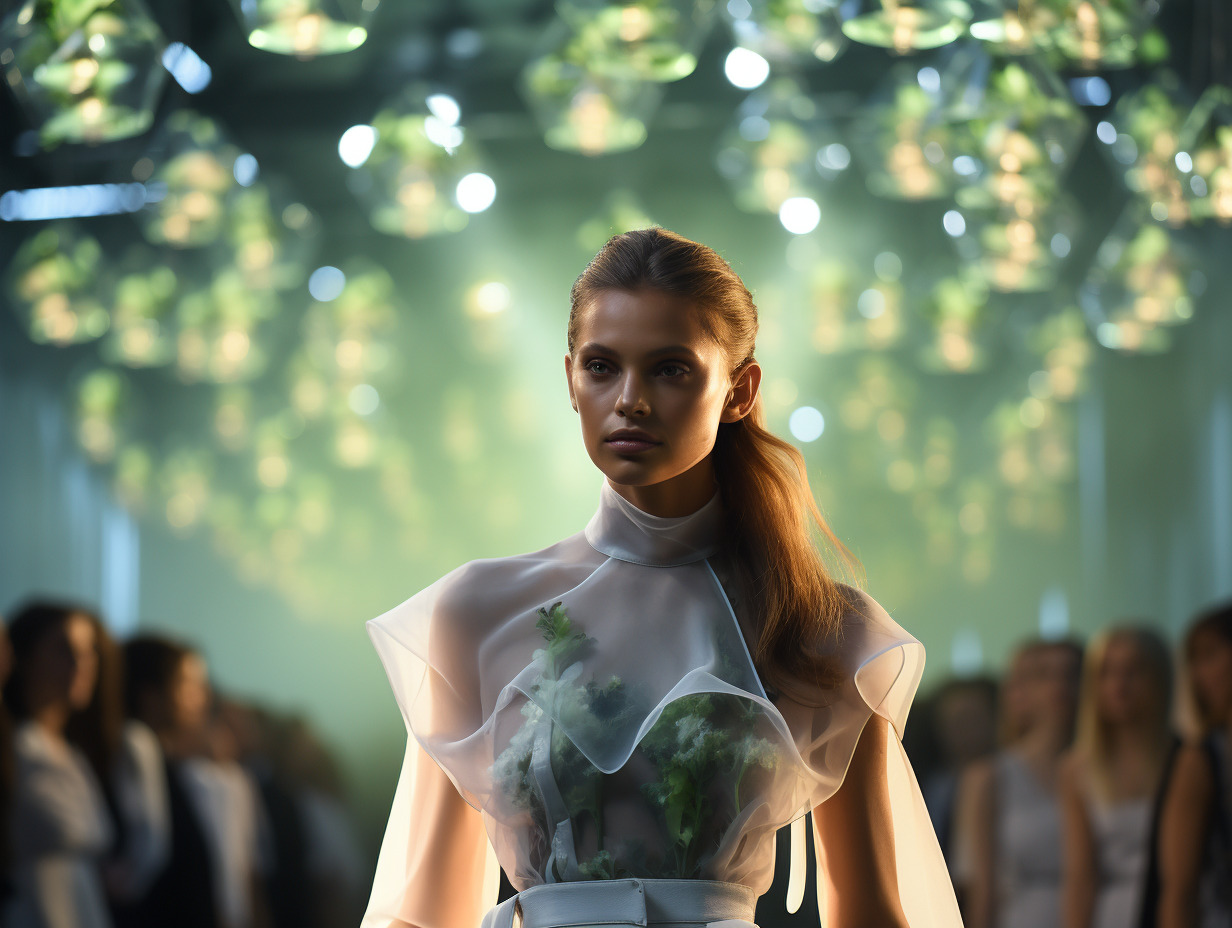
The Fashion of Tomorrow: How Creators Are Shaping the Future of the Sector
In Paris, the cradle of haute couture, fashion designers are reinventing themselves, driven by a wave of creative innovation. Young talents, armed with a sensitivity to trends and a mastery of design thinking, boldly tackle market challenges. The organization Fashion Snoops, a global leader in trend forecasting, propels this renewal through its Thrive Program, a framework designed to support creatives in developing innovative strategies. Michael Fisher and Jenna Guarascio, respectively VP Creative – Menswear and Director of Content Strategy at Fashion Snoops, imprint their vision on the industry, shaping a future where customer experience is at the center of all attention.
Fashion brands today strive to cultivate a more intimate and personalized relationship with their clientele. This experience-centered approach requires attentive listening and unwavering responsiveness to consumer wishes. Young creators, often more agile and open to new practices, integrate these dimensions into their creative process, making creative innovation the driving force behind their development. The relationship between brand and customer then becomes a complex dance, where emotions and shared values are the rhythms guiding the steps.
In this context, design thinking proves to be a valuable tool for creators, allowing them to explore unprecedented solutions and design products that better meet contemporary expectations. The Design School, with its multidisciplinary approach, plays a crucial role in training these innovative minds, capable of envisioning fashion beyond traditional limits. Fashion designers, by combining creativity and strategic thinking, weave the fabric of a constantly evolving sector, ready to embrace the changes that the future holds.