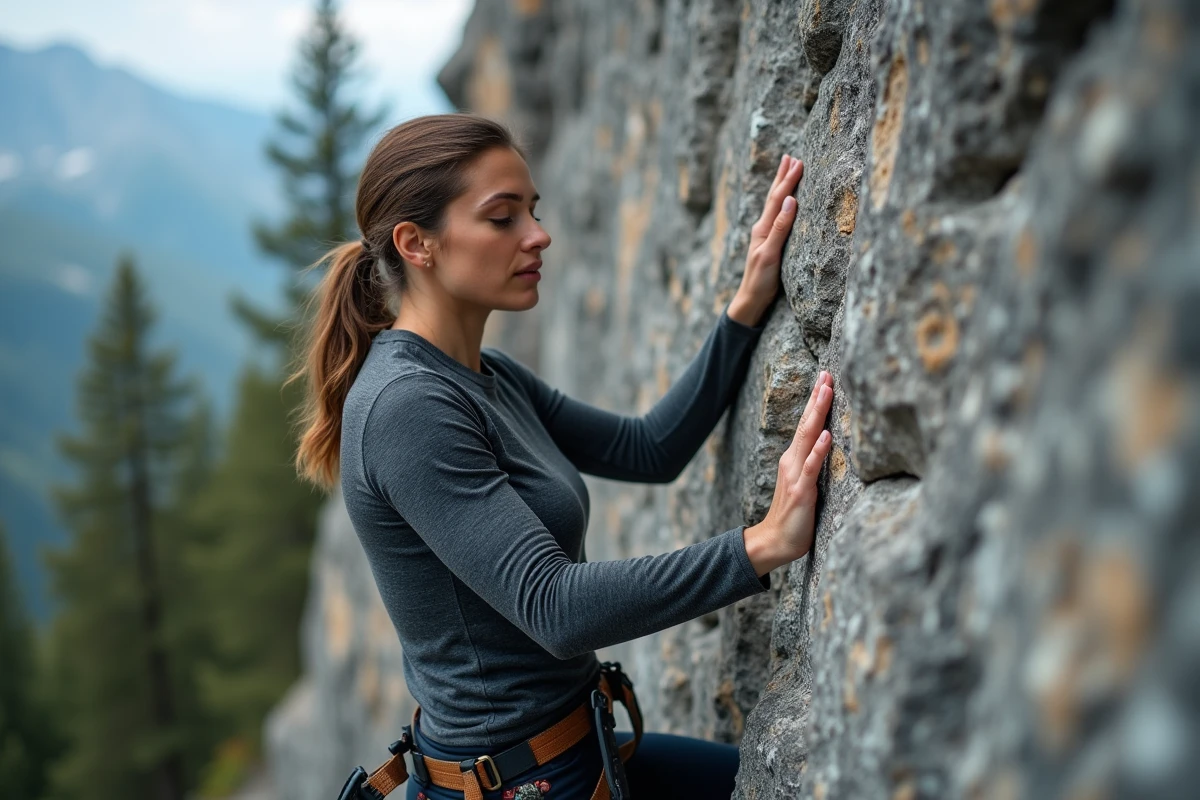
The word “varappe” regularly comes up in conversations about climbing, often used as a direct synonym for climbing. However, the two terms refer to realities that have gradually diverged over the decades, to the point where one has almost disappeared from technical vocabulary while the other now structures an Olympic discipline.
Varappe: a Genevan toponym turned common noun
The history of the word begins at the foot of the Salève, near Geneva. Varappe refers to a rocky corridor where Swiss climbers gathered at the end of the 19th century to practice climbing walls. The name of the place eventually came to designate the activity itself, and then spread throughout the French-speaking world.
This shift from a toponym to a common noun is not exceptional in French (think of the words “champagne” or “cognac”), but it had a lasting consequence: for several decades, varappe was the standard term for talking about rock climbing in French-speaking countries. Alpine clubs, mountain manuals, and the mainstream press commonly used it.
To understand the difference between varappe and climbing, one must go back to the time when both words coexisted without anyone feeling the need to distinguish them. Varappe referred to the concrete practice on rock, while climbing referred to the more general act of ascent.
Climbing and varappe in official French texts
A reliable indicator of the status of a sports term is its presence in regulatory texts. In this regard, the observation is clear: the word varappe has disappeared from official references since the 2010s. State diplomas, RNCP sheets, and texts from the French Ministry of Sports exclusively use “climbing” to refer to roped practice on rock or in gyms.
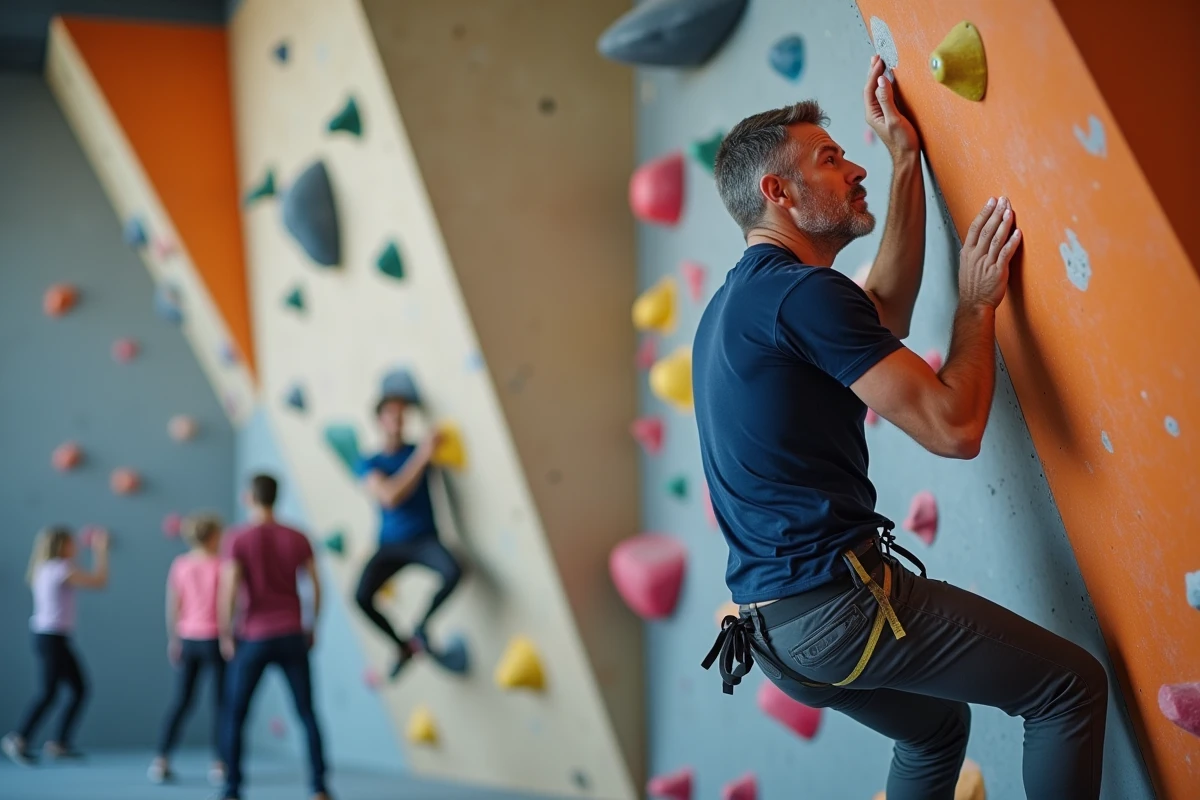
This administrative disappearance is not trivial. It reflects a choice by the French Federation of Mountain and Climbing (FFME) and sports authorities to structure the discipline around a unified vocabulary. Climbing now encompasses sport climbing, bouldering, speed climbing, outdoor climbing, indoor climbing, and adventure terrain. Varappe, on the other hand, corresponds to no federal category.
A word absent from recent practical pages
The analysis of content published by federations, major commercial gyms, and specialized media between 2020 and 2024 confirms this trend. Varappe no longer appears in guidebooks, commercial offers, or social media of industry players. Gyms like Arkose or Climb Up, magazines like Grimper or La Fabrique Verticale systematically use “climbing,” “bouldering,” or “route.”
When the word varappe resurfaces, it is almost always in a nostalgic, historical, or literary context. An article tracing the history of mountaineering, a cultural podcast, a novel: these are the contexts where the term continues to live.
Why “varappe” persists in everyday language
Despite its fading from technical circles, the word remains surprisingly vibrant in everyday French. Many non-climbers say “doing varappe” to describe a hike with rocky passages, a via ferrata, or even a simple steep ascent. This gap between popular usage and specialized usage deserves attention.
Several factors explain this persistence:
- The word sounds French, unlike “bouldering,” and it immediately evokes mountains and rocks without needing additional context.
- General dictionaries (Larousse, Robert) continue to reference it as a synonym for climbing on rock walls, which maintains the idea of a strict equivalence.
- In everyday language, varappe has shifted to a non-technical meaning: it designates any progression on steep terrain, including situations unrelated to sport climbing or mountaineering.
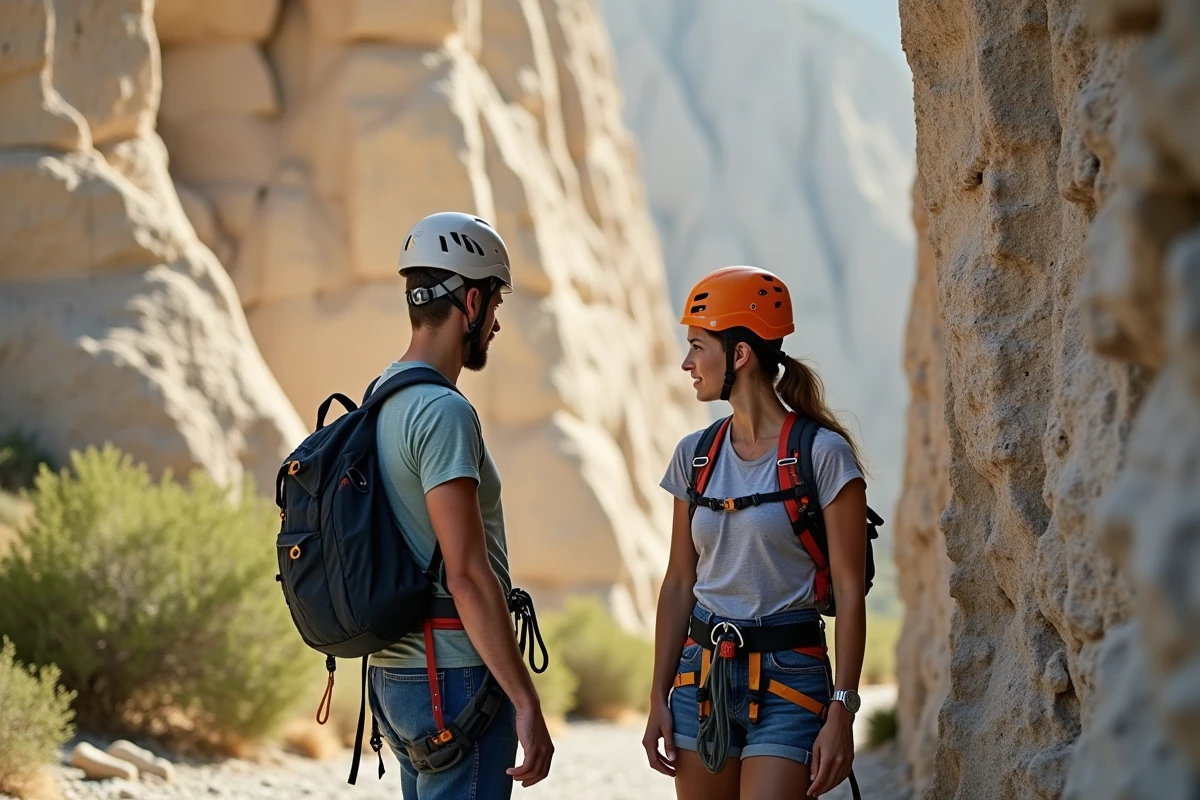
This semantic shift creates a recurring misunderstanding. Someone who claims to have “done varappe” during a hike in the Calanques is not talking about the same activity as a climber who is chaining routes on cliffs. The word varappe no longer carries any indication of level, technique, or equipment, whereas “climbing” refers to a precise framework with ratings, safety standards, and codified practices.
Varappe and climbing: what vocabulary reveals about the discipline
The gradual replacement of “varappe” by “climbing” is not just a matter of lexical fashion. It accompanies a profound transformation of the practice. Climbing has structured itself as a standalone sport, with its entry into the Olympic Games, its competition circuits, and its dedicated urban gyms. Varappe, on the other hand, referred to a time when climbing on rock remained a component of mountaineering, not an autonomous discipline.
Three markers illustrate this shift:
- The proliferation of climbing gyms in France has introduced climbing to an audience that has never set foot in the mountains. For these practitioners, the word varappe evokes nothing.
- The grading systems (from 3a to 9c), the standards for equipping sport routes, and the safety protocols in gyms have created a technical language where “varappe” has no place.
- Speed climbing, an Olympic discipline since Tokyo, has no direct link to what varappe historically designated.
Using “varappe” to talk about contemporary climbing is akin to using “velocipede” to refer to a carbon road bike. The referent still exists vaguely, but the gap between the word and the technical reality has become too wide for the term to remain operative.
Varappe now belongs to the history of the Francophone sports language. It named a practice at a time when it had not yet developed its own structure. Climbing, by codifying itself, has rendered this word obsolete in all contexts where precision matters, while allowing it to live on in everyday conversation, where no one asks for a rating.