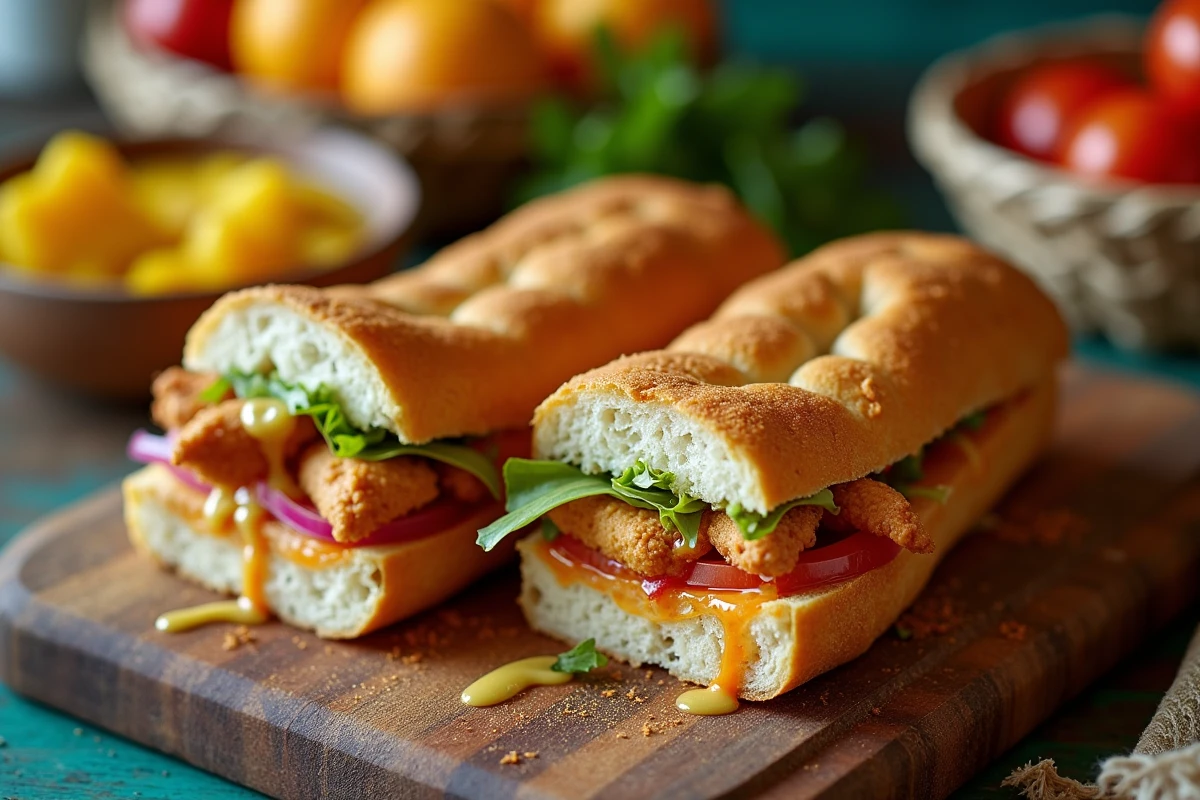
A puffed, golden, crispy bread, split in two and filled with cod or smoked chicken: the bokit is the sandwich that Guadeloupe invented without ever following a fixed recipe. Its history dates back well before the food trucks of Pointe-à-Pitre, and its linguistic journey alone deserves attention.
From the Amerindian jonikin to the Guadeloupean bokit: an unknown linguistic lineage
Before being a fried sandwich, the bokit was a word. And before being a Creole word, it was an Amerindian flatbread. The Shawnee Indians, in the New England region, cooked a corn-based preparation called “jonikin” on hot stones. European settlers adapted it by adding wheat flour and renamed it “journey cake,” literally the cake of the day, because it was enough to feed a worker from morning to night.
The term traveled with colonial expansion southward. Passing through Louisiana and the Caribbean, journey cake became johnny cake. In Barbados and Dominica, it was referred to as “djoncake.” French speakers in the Caribbean understood it as “djonkit” or “dannkit.” Then, in Guadeloupe, the final contraction gave “bokit.”
Have you ever noticed that a dish changes its name with each island crossed? That’s exactly what happened here: each stop twisted the pronunciation, and each community modified the recipe. You can trace the origin of the bokit on Chapeau Melon, which details this culinary genealogy step by step.
Fried dough and Creole fillings: what distinguishes the bokit from a simple fritter
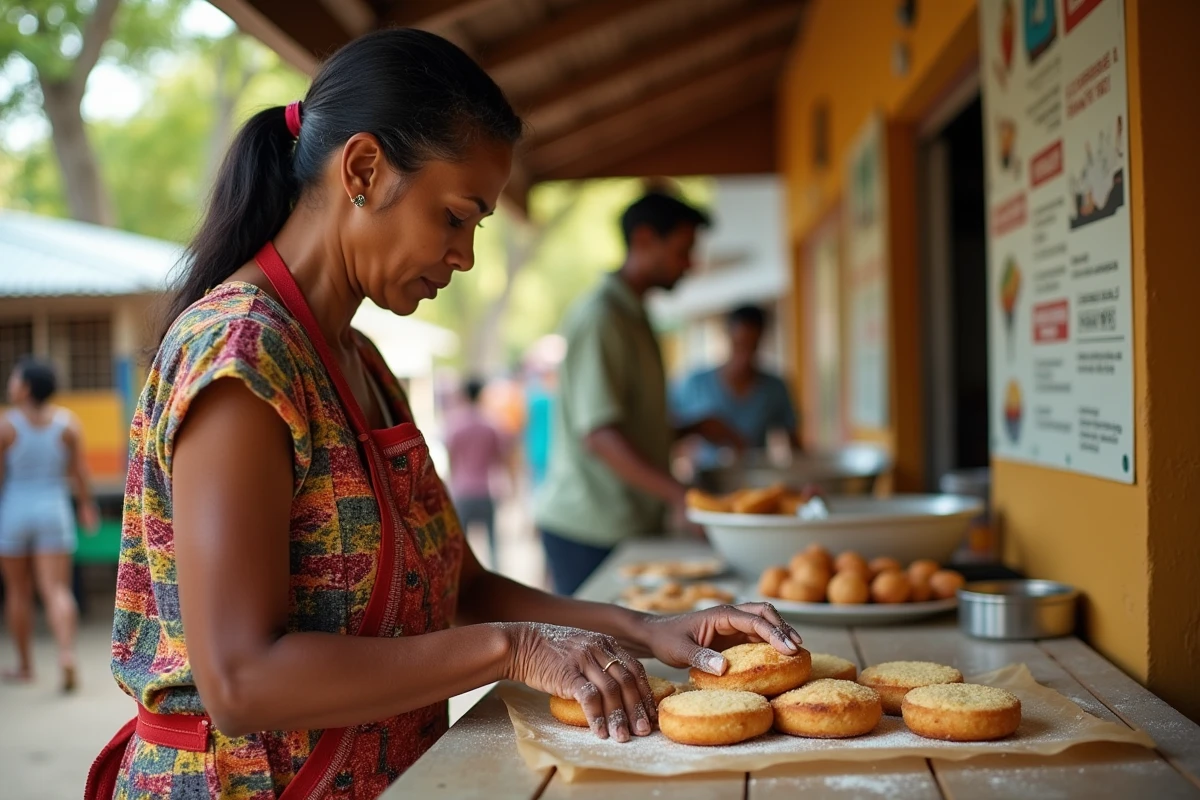
The bokit is neither a fritter nor a classic sandwich. Its uniqueness lies in the cooking technique and the balance between the dough and the filling.
The dough is fried in a bath of oil, giving it that golden, crispy exterior and soft interior. The basic preparation remains simple: flour, water, salt, yeast. No sugar, no butter. It’s the frying that does all the work for the texture.
Traditional fillings reflect Guadeloupean cuisine in its most direct form:
- Salted and shredded cod, often spiced with chili and onion, remains the historical filling, that of market workers
- Smoked chicken (wood-smoked), sliced and accompanied by fresh vegetables and Creole sauce
- Ham and cheese, a quicker version that has become the default choice in lolos and food trucks
- Tuna, prepared in a salad with spices and vegetables, for a lighter marine version
The common point among all these versions: the filling is always generous and seasoned with Creole spices. A half-empty bokit does not exist.
Heritage status of the bokit: when a sandwich becomes a territorial emblem
Since the early 2020s, the bokit has changed status in Guadeloupe. It is no longer just a street snack sold at markets. Several municipalities and cultural organizations in Guadeloupe are working on its heritage recognition. The Regional Council has included it in files dedicated to local culinary heritage, alongside colombo and bélédès.
The bokit is now included in the French dictionary, which has formalized its transition from Creole to common vocabulary. This linguistic recognition accompanies a broader movement to promote the flavors and specialties of the island.
Dedicated events, sometimes called “Bokit Days” or best bokit competitions, bring together restaurateurs, food trucks, and chefs in Guadeloupe as well as in mainland France. These festivals, often supported by tourism offices or municipalities, position the bokit as a tourist attraction product on par with rums and beaches.
Bokit and health in the Caribbean: the shift to lighter versions
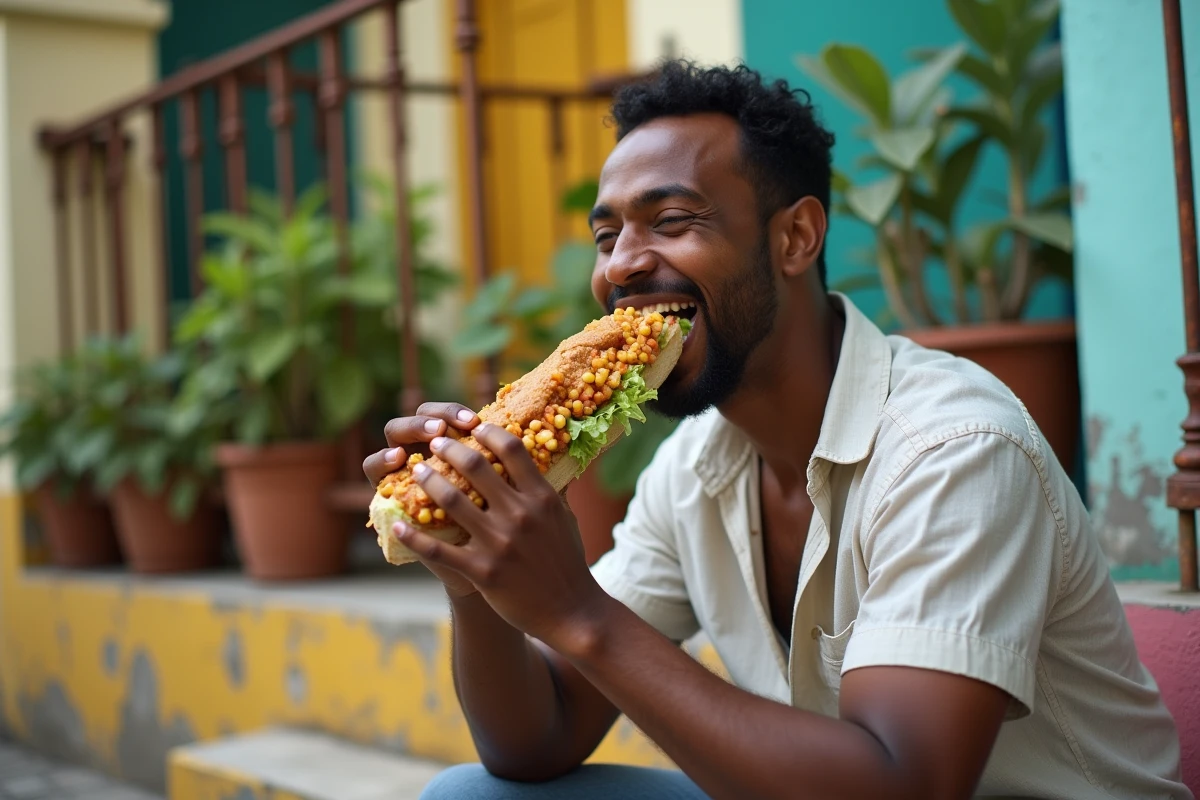
A fried bread filled with cod and sauce is not a diet dish. And this reality raises questions in a tense health context. The French Caribbean faces concerning rates of obesity and diabetes. Local dietitians and doctors have pointed out the caloric content of the classic bokit for several years.
The response has not been to give up on the bokit, but to reinvent it. Several avenues are being explored:
- Oven-baked or griddled versions, which reduce the amount of oil absorbed by the dough
- The use of alternative flours (sweet potato, coconut, cassava), which modify the nutritional profile while remaining within the Caribbean culinary framework
- Fillings based on grilled vegetables, fresh fish, or plant-based preparations, which are less rich than traditional fried cod
The lighter bokit retains the shape of the fried sandwich but changes its content. This shift does not have unanimous support among purists, who believe that frying defines the bokit. The tension between tradition and health adaptation fuels discussions in markets as well as on social media.
A sandwich that does not stay on the island
The bokit has far exceeded the shores of Guadeloupe. In Paris, several establishments specializing in Caribbean street food offer it, sometimes with reimagined fillings for a metropolitan audience. The agoulou, another Creole sandwich filled in a round bread, sometimes competes with it on Caribbean restaurant menus, but the bokit retains an advantage: its fried texture, immediately identifiable, which resembles nothing else in French street food.
The bokit did not need a Michelin-starred chef or a television show to become known. It spread through markets, lolos, food trucks, and then through Caribbean diasporas settled in mainland France. Its strength lies in its simplicity and the richness of its Creole fillings, allowing each preparer to put their signature on it without betraying the basic principle: a fried dough, split, filled, served hot.